

Dark skies
Northumberland Coast National Landscape Dark Skies project is funded by the National Lottery Heritage Fund, to conserve night skies and connect people with the nocturnal heritage of the Northumberland Coast National Landscape.


Northumberland Coast National Landscape Dark Skies project is funded by the National Lottery Heritage Fund, to conserve night skies and connect people with the nocturnal heritage of the Northumberland Coast National Landscape.
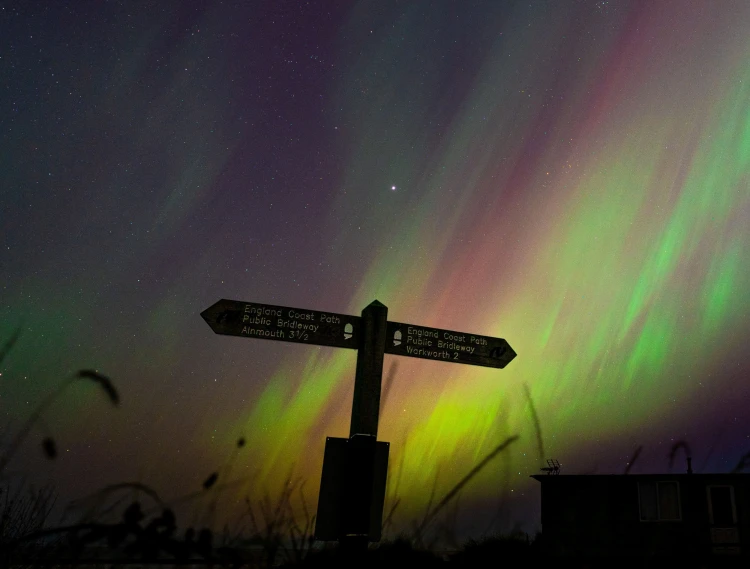
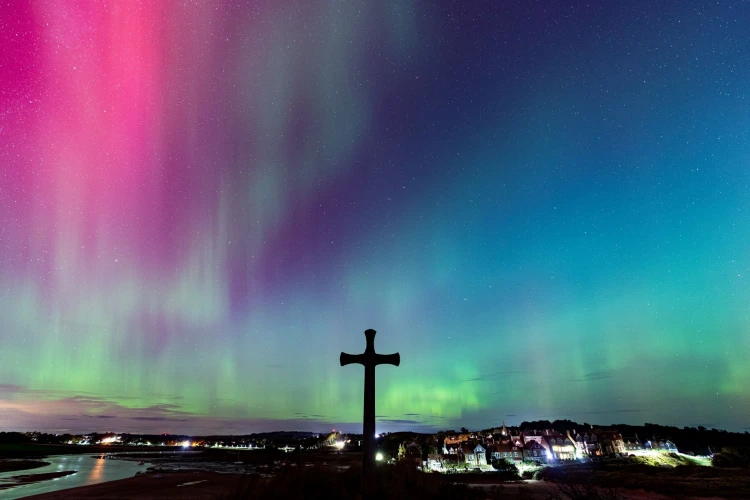
Whilst much of the Northumberland Coast is intrinsically dark, levels of artificial light and light pollution are steadily growing, eroding the dark skies and nocturnal tranquillity that can be experienced in this part of rural Northumberland.
The primary cause of sky glow is blue wavelengths. Disproportionate sky glow is caused by blue light because the wavelengths are shorter and scatters much more easily when it hits moisture and particles in the atmosphere. Unlike blue cool tone lights, warm toned lights emit longer wavelengths, which have significantly less impact on sky glow, human health and wildlife.
The impact of light pollution is not limited to the negative effect it has on not being able to see the stars. Plants and animals depend on daily cycles of natural light and dark to sustain critical behaviours. Animals active at night or that rely on darkness for foraging and migrating such as bats, owls, birds and moths are threatened by light pollution. Conserving and enhancing the ruralness and tranquillity of the Northumberland Coast is critical to maintaining its natural beauty and ecological richness.
Like animals, humans' circadian rhythm is impacted by artificial light. Exposure to blue wavelengths, particularly at night-time, from indoor and outdoor lights and streetlights can lead to poor sleep and increased stress.
Working together to protect dark skies
We want to raise awareness among businesses, residents and policymakers of the impacts of light pollution and urbanisation on our communities and dark skies. Protecting the dark skies of the Northumberland Coast for current and future generations means adopting lighting best practice.
To protect our dark skies and reduce light pollution, there are simple steps that can be taken to significantly improve lighting efficiency.
For wall-mounted lights, make sure the light fitting is angled parallel to the ground or points only where light is needed. Adjusting the angle of a light fitting can often be done instantly and can significantly reduce light spilling into the landscape.
Choose warm-toned bulbs and set LED lights to 2700-3000 kelvin instead of bright, blue-toned lighting.
Can you directly see the light source (the LEDs or arc tube)? If you can see the bare light source, it can create glare and cause eye strain. Look for light fittings where the light source sits flush with or within the fitting.
Similarly, consider installing a hood or choosing a light fixture that incorporates one. This helps shield the light source, ensuring light is directed only where it is needed and preventing upward or sideways light spill.
The Dark Skies Community Grant Fund is for residents, businesses and organisations within the Northumberland Coast National Landscape contribute to the improvement of dark sky quality in the National Landscape by reducing light pollution, increasing energy efficiency and supporting nocturnal wildlife. Dark sky friendly lanterns and light replacements are some of the things available for funding.
Please see attached application form and eligible item document for more information.
To submit your grant application form, or to find out more about the project, please email Theia@northumberlandcoast-nl.org.uk
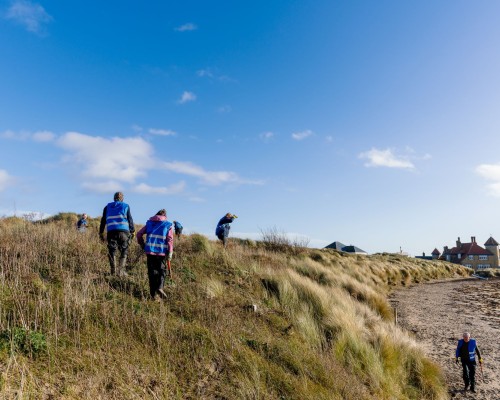
The Conservation Team is a volunteer initiative carrying out vital tasks.
Find out more
Discover the traditional villages and lively harbours in the Northumberland Coast National Landscape.
Find out more
